On self-sacrifice, the fractures we carry, and the holy powers waiting beneath the weariness

For a month, every evening looked the same. My baby girl in her cot, outraged at being laid down. Me in the nursing chair beside her, one hand on the rail. Not rescuing. Not leaving. Staying, while every part of my body begged me to scoop her up and make the crying stop.
It was some of the hardest mothering I have done. And somewhere in those long nights I realised there were two little girls in that room. One in the cot, red-faced and furious. And one in me, who learned a long time ago that when you cry, nobody comes, so you may as well stop needing anyone.
The difference this time was simple. Someone stayed.
She settles in a few minutes now. My own reserves were scraped right to the bottom of the pot to get here. And in the same season, years of practices and teachings that had sat dormant in old notebooks finally came together. I have been dancing with Saraswati, goddess of learning and the arts, through all of this refining. She is the one who sits with you while you prune and polish, until what was always there can finally be seen.
Out of that refining, the Mother came forward. I have spent the last few weeks in devotion with her. This post is what she has been teaching me.
The shadow we mistake for love
Let's start where I always start: with the shadow.
The self-sacrificing mother is the one we are taught to applaud. She eats the burnt piece of toast. She serves herself last, if there's anything left. She is first up and last to bed, and when someone asks how she is, she says "fine" before the question has finished.
We call her selfless, and in a way that's exactly right. Over time, she loses her self.

In one of my devotions, I was asked which mother in nature I felt drawn to. The answer came straight away: the mother tree. A great old tree in the forest, sending what she has through her roots to the young ones growing in her shade. But in my vision, the soil around her was empty. No nutrients coming in. So she gave from her own trunk instead, and kept giving, and called it love. Her saplings were alive and growing. She was hollowing out.
That image stopped me. Because I know her. Maybe you do too.
The self-sacrificing mother isn't weak. She is often the strongest woman in the room. Her shadow is that she has quietly agreed she is not part of what she tends. Her needs come after everyone else's, and somehow "after" never arrives.
She has two sisters who often sit at the same table.
The codependent mother feels her worth rise and fall with the wellbeing of the people she loves. If they are struggling, it must be her fault, and her job to fix. Her children's choices feel like her report card. She forgets she was ever a woman apart from her role, with her own longings, her own growth, her own fire.
The angry, overprotective mother has had to fight alone for so long that her body is always braced. Her protective fire is real and it is holy. But when no one has ever stood beside her, it can boil over, or it goes numb because the last time she let it rise, it cost too much. Then she is labelled the problem, when she was only ever trying to keep her little ones safe.
If you recognise any of them in yourself, please hear this: it was never a personal failing. Each of these mothers is doing exactly what she learned she had to do to keep everyone alive.
Why are we so tired?
Here is something we are rarely told. Mothers were never meant to do this alone.
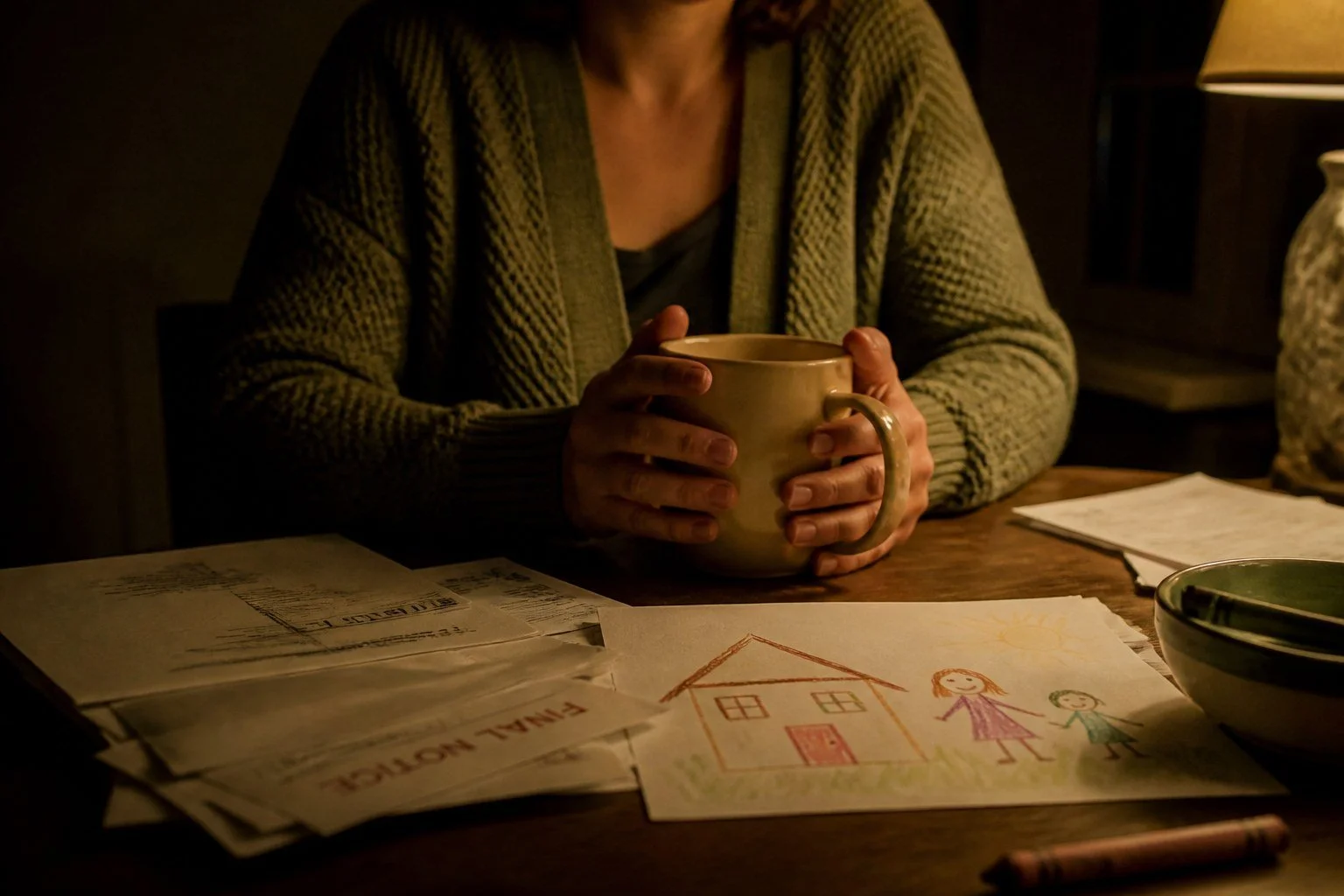
Anthropologist Sarah Blaffer Hrdy has spent her career studying how humans raise their young. Her finding is that we are "cooperative breeders". For most of human history, children were raised by many hands: grandmothers, aunties, older siblings, neighbours. The village wasn't a sweet saying. It was how our species survived.
In te ao Māori (the Māori world), tamariki (children) belonged to the whole whānau (extended family). Whāngai, where a child is raised by relatives, was simply part of life. My own great-grandmother raised twenty children off the land. She didn't do that inside a closed front door with no one to call.
Then came a world built around a very different idea of the family. A small house. One mother at the centre, often in a new suburb or a new country, far from her people. Colonisation and the push into cities pulled whānau apart and called it progress. The village was quietly dismantled, and the whole weight of it landed on one pair of shoulders.
The numbers still show it. Australia's time-use surveys keep finding that women carry the larger share of unpaid care and housework, even when they also work for pay. Then we wonder why mothers are exhausted, and sell them another planner.
We also lost the words for what a mother goes through. In 1973, anthropologist Dana Raphael coined the word matrescence: the becoming of a mother, as big a shift in body, identity and relationships as adolescence. Most of us were never told it was happening to us. We just thought we were failing at something that was supposed to come naturally.
And in a world that took away the village, mothers were set against each other instead. Competing at the school gate, in the in-law kitchen, in comment sections. Who's coping, who's thriving, whose children behave. Comparison fills the gap where community used to be.
This is what a patriarchal world does to the Mother. It doesn't remove her power outright. It isolates her, overloads her, and then calls her tiredness a personal problem. Cut off from the holy powers that were always meant to be shared, she survives on what is left in the cupboard.
The fractures we carry
Most of the women I have walked beside have danced with the shadow of the Mother. Sometimes in how they mother. Sometimes in how they were mothered. Usually both.
I'll go first.
My eldest son initiated me into motherhood when I was on a path that was heading nowhere good. He saved my life. And for years after that, raising four children while running businesses and studying full time, people would ask, "How do you do it all?" I would brush it off. The truth was I mothered more like a drill sergeant than a nurturer. I ran our home like an operation, because survival asked that of me. I often felt more valued in my career than I did as a mother, and I envied women whose circumstances let them simply be at home with their little ones.
That wasn't my true nature as a mother. It was the armour I put on to keep us all afloat.
I can see now where some of that armour was forged. My mum is a deeply creative, spiritual woman. Some of my best childhood memories are the games she invented and the arts and crafts spread over the table. She was also carrying her own wounded little girl, and when life got frightening, that little girl would come forward and retreat. So from young, I was often the one holding the big feelings in our home, including some that were far too big for a child to hold.
A girl who learns she must tend her own fears grows into a woman who needs no one. Hyper-independence looks like strength, and people praise it. But it is lonely, and it is catching. I watched it pass from me into my own children. That is one of the griefs of the Mother: seeing your own survival strategies show up in the little ones you would give anything to protect.
For some of you, the fracture is with your mother. She may be living or gone. You may be close, or estranged, or somewhere painful in between. You may be grieving a mother you still have, because the mother you needed never arrived. That is a real grief, even when no one brings flowers for it.
For others, the fracture is with your children. Maybe you were never able to have them. Maybe you mother from a distance you didn't choose. Maybe you look back at the years you were in survival and ache for what you couldn't give.
I want to say this as clearly as I can. You can grieve what was missing and still honour what was given. You can see your mother as a woman who was carrying more than she could hold, and still name what it cost you. Both are true. Holding both is part of the Mother's work.
Now, with baby number five, mothering looks completely different for me. I am home. I am present. I actually enjoy it, for the first time. Not because I finally got it right, but because I am finally being resourced, and I am learning to let myself be.
The holy powers calling beneath
Here's what the shadow has been guarding all along. Beneath every one of those tired mothers is a holy power, calling her back to herself. These are the three that have been walking with me.
The Resourceful One
She makes something from almost nothing. Soup from what's left in the cupboard. A plan from a pile of bills. On one of my hardest days, when my little one was fighting sleep and I was running on empty, I made her playdough from flour and salt on the bench until she was ready to lie down. That's her.

In the wild, she looks like the elephant matriarch. Researchers in Amboseli, Kenya found that herds led by older matriarchs were better at telling real danger from false alarms, because she holds the herd's knowledge in her body. Her wisdom is a resource for everyone around her.
Here's the edge she has been teaching me: true resourcefulness includes receiving. A resourceful mother doesn't only find a way to do it all herself. She looks at what she has, sees the gaps, and fills some of them with other people. In my devotions I wrote, almost surprised, "I am getting really good at asking for help." That sentence would have been impossible for me a few years ago.
The Gardener
She primes the conditions for growth, then lets things grow. Think of the mother kangaroo. Her joey climbs out of the pouch to explore, hops back in when it's frightened, and climbs out again a little braver. She doesn't drag it out or shove it back in. She stays near, and she lets it choose.

The Gardener knows that what she grows isn't hers to own. Not her children, not her projects, not her people. She tends the soil and keeps the pests away, and trusts the light to do the rest.
That's where I am with my own work right now. After a year of building, the foundations are in, and my job is shifting from effort to tending. The Gardener is teaching me to loosen my grip.
The Advocate
She is the voice for those who can't yet speak for themselves. The mother hen, wings spread over her chicks the moment a hawk's shadow crosses the yard.
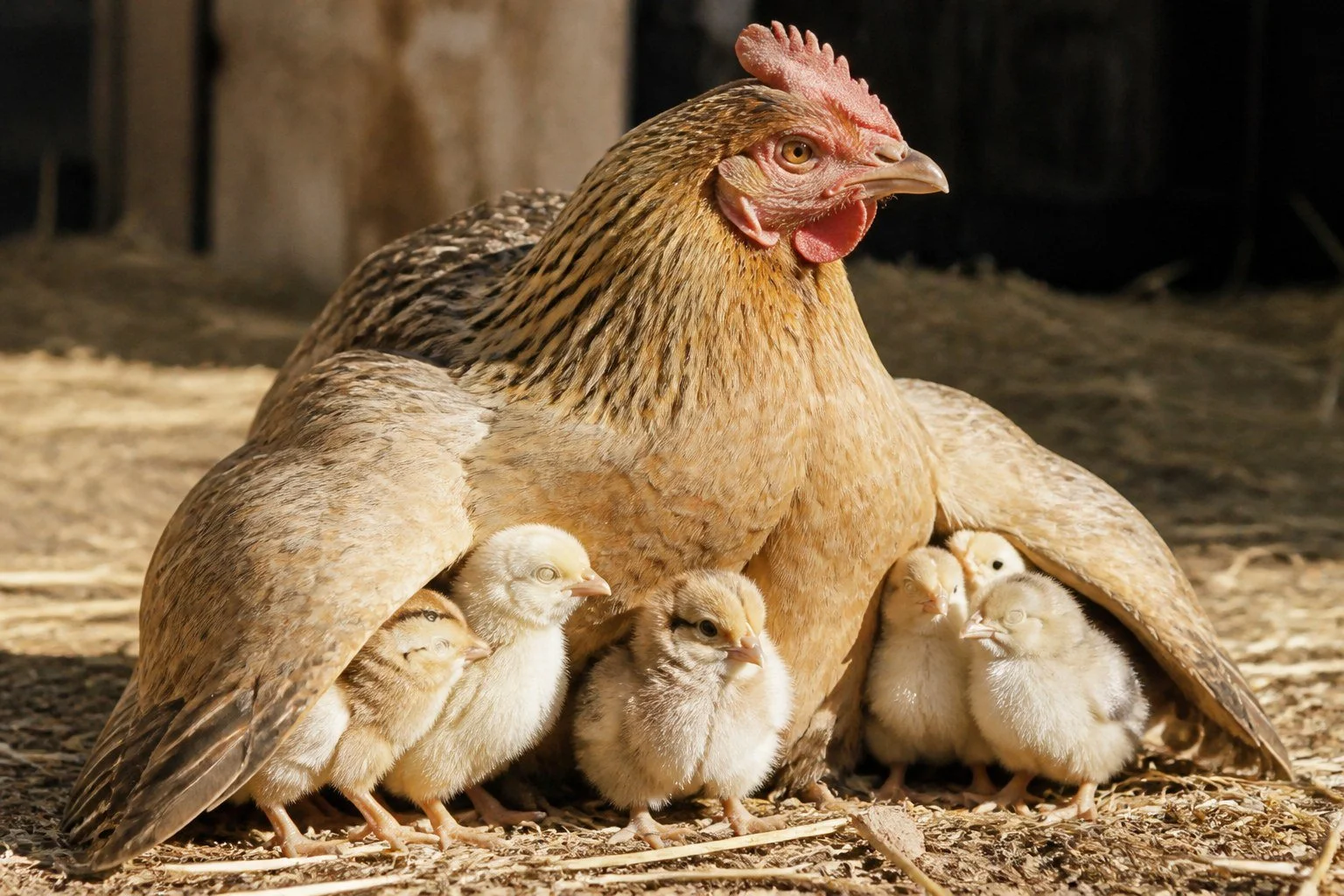
The Advocate is the holy face of the angry, overprotective mother. Same fire, but met and directed. She asks, "What kind of threat is this, really, and what does it call for?" Sometimes it calls for a roar. Sometimes it calls for a letter, a phone call, a quiet word with the right person. And sometimes it calls for her to step back so her little ones can find their own voice.
She also learns to let others advocate for her. That one is the hardest, and the sweetest.
Ways to sit with the Mother
You don't need to overhaul your life to meet her. Start where you are, with whatever is in the cupboard. Here are some of the practices that have been feeding me.
Feed the mother first, once. Make yourself something to eat or drink with real care, from whatever you have. Sit down for it. Before you take the first mouthful, put a hand on your heart and remind yourself that you belong to the circle you feed. If cooking for yourself feels too hard right now, close your eyes and imagine someone who loves you making it for you: a grandmother, an ancestor, the Mother herself. Let yourself be fed.
Map your fire. List the areas of life you tend: home, meals, children, partnership, work, money, body, rest, spirit, friendship, space just for you. Give each one a single word: steady, stretched or depleted. Don't fix anything yet. Just look. Then, for each stretched area, ask what it needs most: a resource, support, connection or time. Most of us have never let ourselves see the whole fire at once.
Make one ask. Choose one stretched area and ask someone to own a piece of it. Not "help", which keeps you as the manager, but truly take it on. Try something like: "I'm carrying a lot with ___. Would you be willing to take on ___?" If the answer is no, that's about their capacity, not your worth. Go back to your map and find another source.
Call in a golden field. This is a boundary practice that came to me in devotion. Picture a soft field of golden light around you, just beyond your skin. It doesn't shut anyone out. You can still see and love everyone. But when someone else's mood or worry comes towards you, let it meet the gold and turn into warmth instead of draining you. Link it to things you already do: putting the kettle on, walking through the door, before a hard conversation.
Write to your mother. Living or passed, near or estranged. Tell her what you can see now about what she carried, what still hurts, and what you understand. You never have to send it. Then, if you're brave, let the mother within you write back.
Catch the shadow in the moment. When you notice yourself eating last again, pause and say to her, "I see how much you carry." When you feel the urge to fix someone else's choices, "Your worth is not in their hands." When your fire rises, a hand on your chest: "You've had to be the only one for so long."
And hold this question close: who is holding you, while you hold everyone else?
When I first asked it in my devotion, my answer was "No one. I carry it alone." By the end, it had changed: "I am holding me. And so are the women who have gathered around me." Nothing outside me had changed that morning. What changed was that I let myself see who was already there.
Coming home to the hearth
The Mother isn't asking you to give more. She's asking you to come back to the fire, sit down, and warm your own hands for once.
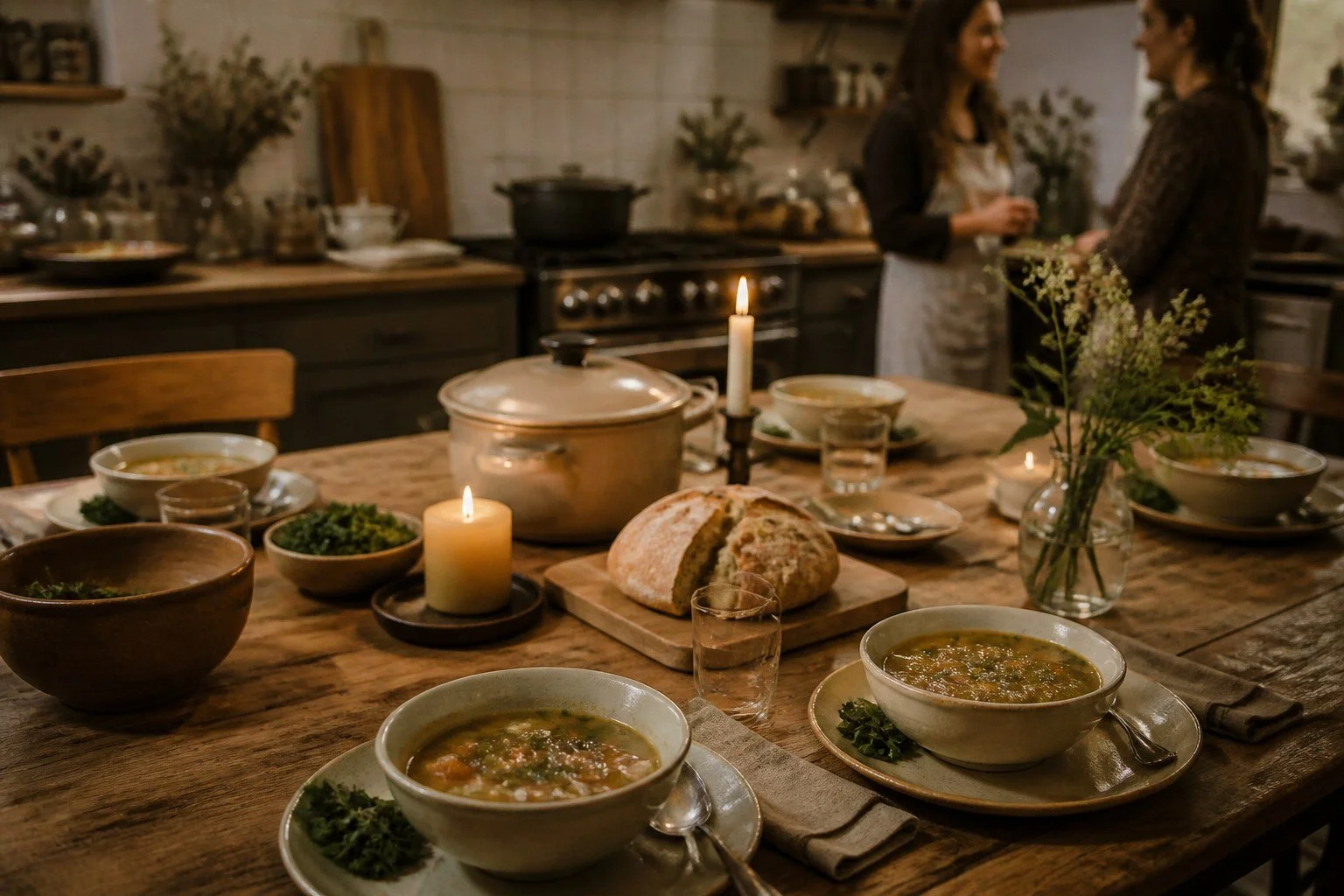
When she is resourced, something shifts in the whole house. Our children watch us rest, ask for help, set a boundary and laugh about the sticky bench. They learn that a full life includes receiving. That is how the line changes: not through one perfect mother, but through one resourced one.
And when enough mothers are resourced, systems start to change too. That is the fire I am here to tend.
Go deeper with the Mother
The Devoted Mother: The Hearth Keeper is my printable workbook for every woman who tends life, whether you've birthed children or not. It walks you through the three shadow mothers and their mirrored holy powers, the kitchen table guided journey, letters to your mother and the mother within, and the full practical toolkit: mapping your fire, asking for support, the golden field, outer boundaries and your own Hearth Plan. It's yours for $20, to pick up whenever the weight feels heavy. Meet the Devoted Mother
1:1 Spiritual Activation is for when you're ready to go further with someone walking beside you. These sessions are real life in the room: my own little one is often with me, and you are welcome exactly as you are, mid-motherhood and mid-mess. Together we meet what is interfering with your fire, and resource you to lead, guide and protect what you love. Sessions are $200. Book your 1:1 Spiritual Activation
With love, from one mother at the hearth to another,
Kia
